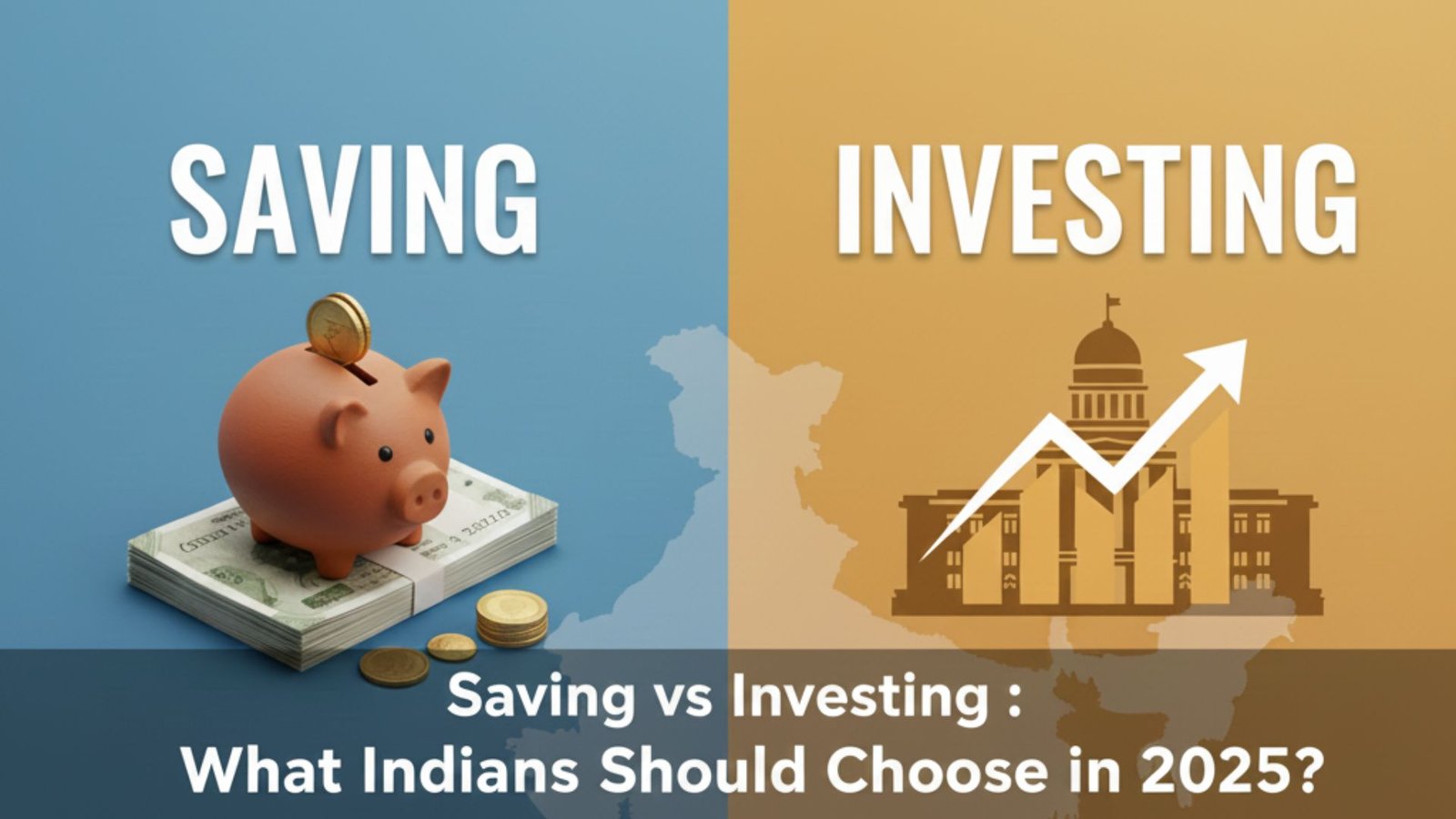
In 2025, money management has become more important than ever for Indian households. With rising inflation, increasing lifestyle needs, and financial uncertainty, many people are confused about whether they should focus on saving money or investing it. Both strategies have their own purpose—but the right choice depends on your goals, risk tolerance, and timeline. Understanding the difference can help you build long-term wealth while maintaining financial security.
Savings help you protect your money and keep it safe for short-term needs. Investments, on the other hand, help your money grow and beat inflation. A smart financial plan requires a balance of both—because saving alone won’t make you wealthy, and investing without security can be risky.
| Feature | Saving | Investing |
|---|---|---|
| Risk | Very Low | Moderate to High |
| Goal Type | Short-Term | Long-Term |
| Returns | Low (3%–6%) | Higher (8%–14%) |
| Examples | FD, RD, Savings Account | SIP, Stocks, Gold, NPS |
What is Saving?
Saving means keeping money aside in a safe place where it remains accessible and risk-free. This includes savings accounts, recurring deposits, emergency funds, or fixed deposits. Savings are ideal for short-term goals such as medical emergencies, travel plans, or buying essentials. For example, if your monthly income is ₹50,000 and you save 20% (₹10,000), that money ensures financial stability when unexpected events occur.
What is Investing?
Investing means using your money to buy assets like mutual funds, stocks, gold ETFs, real estate, or government schemes with the goal of growing wealth. Unlike savings, investments may fluctuate but can generate higher returns. For example, someone investing ₹5,000 per month in a mutual fund SIP at 10% annual growth could build approximately ₹10–₹12 lakh in 10 years.
Real Comparison with Numbers
If you save ₹5,000 per month in a regular bank savings account earning 3.5% interest for 5 years, your money becomes approximately ₹3.28 lakh. But if you invest the same ₹5,000 monthly in an equity mutual fund SIP with 10% return, the value after 5 years becomes nearly ₹3.87 lakh. This difference proves why investments are essential when planning long-term wealth.
Which Should You Choose in 2025?
There’s no one answer for everyone. A smart approach is to save first, then invest. Experts suggest this simple formula: 1️⃣ Build an emergency fund (3–6 months of expenses) 2️⃣ Maintain liquidity for short-term needs 3️⃣ Invest consistently for long-term goals like retirement, education, or wealth growth. This balanced approach gives safety and growth together.
Conclusion
In 2025, Indians should not choose savings or investing—they should choose both. Savings protect you while investments grow your money. The best financial strategy is to build a stable foundation with savings and then invest consistently to secure long-term wealth and financial freedom.